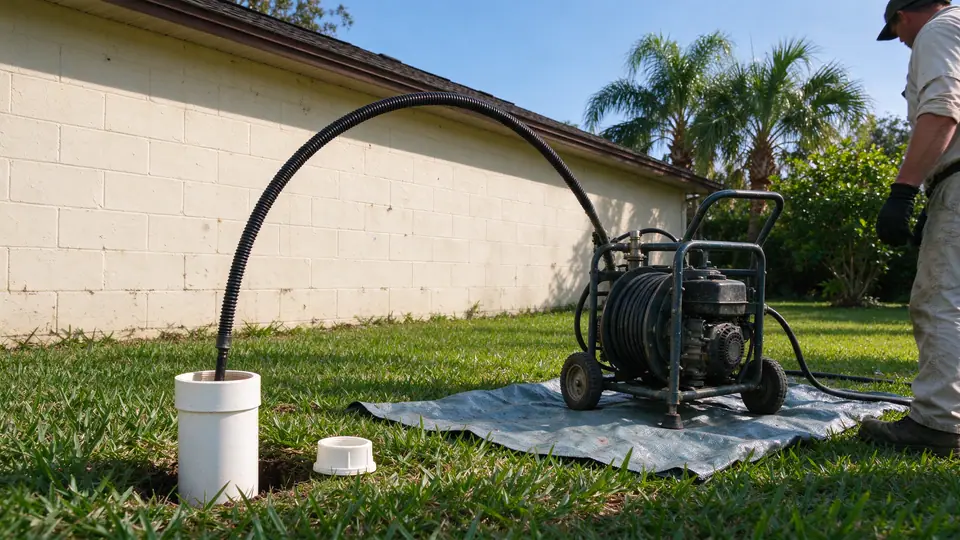
Sewer line cleaning in Tampa removes an obstruction or accumulated material from accessible private drainage piping. It can restore flow and prepare a line for inspection. It does not repair a crack, close a root entry or change the elevation of a low section. Terra Tampa Sewer Line Repair offers this work for private sanitary piping in Tampa and nearby Hillsborough communities. Work is performed by fully licensed and insured contractors. Public mains, pumps, septic tanks and drainfields, and domestic water repiping are outside this service.
Is this an isolated obstruction or a recurring condition?
The history matters. A one-time obstruction, a line that blocks repeatedly and several fixtures backing up together create different questions. Record which fixtures are affected, what earlier clearing achieved and whether a camera recording already exists. Those observations frame the investigation without proving a particular pipe defect.
How the method relates to the pipe
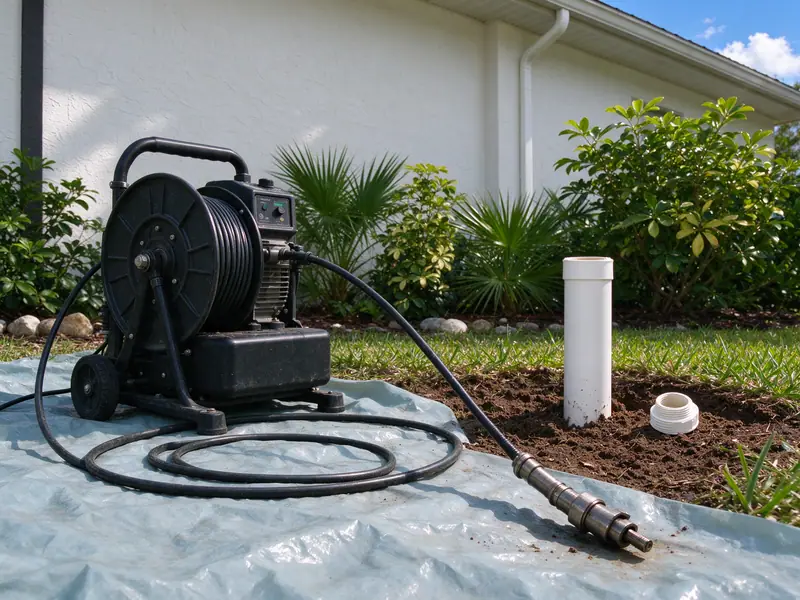
Mechanical clearing and other suitable cleaning approaches remove material from the passage. The choice depends on access, pipe condition and the obstruction. Restored flow may allow a more useful camera view afterward. The estimate should distinguish immediate clearing from optional inspection or structural repair, with any additional work clearly authorized.
A line carrying water after cleaning is not proof of a sound pipe from end to end. Deposits, remaining water or inaccessible branches can still limit assessment. If a structural recommendation follows, ask for the observed finding rather than accepting that recurrence alone establishes the need for complete replacement.
Access and the property above the line
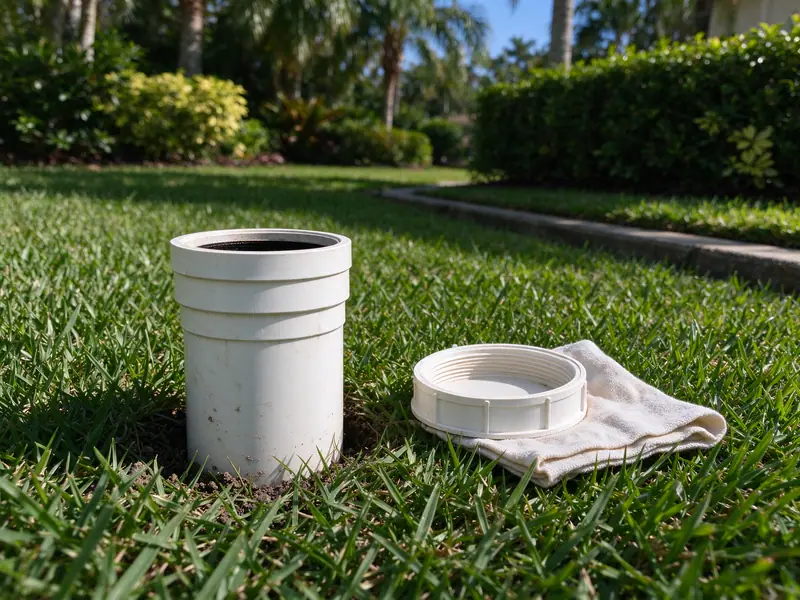
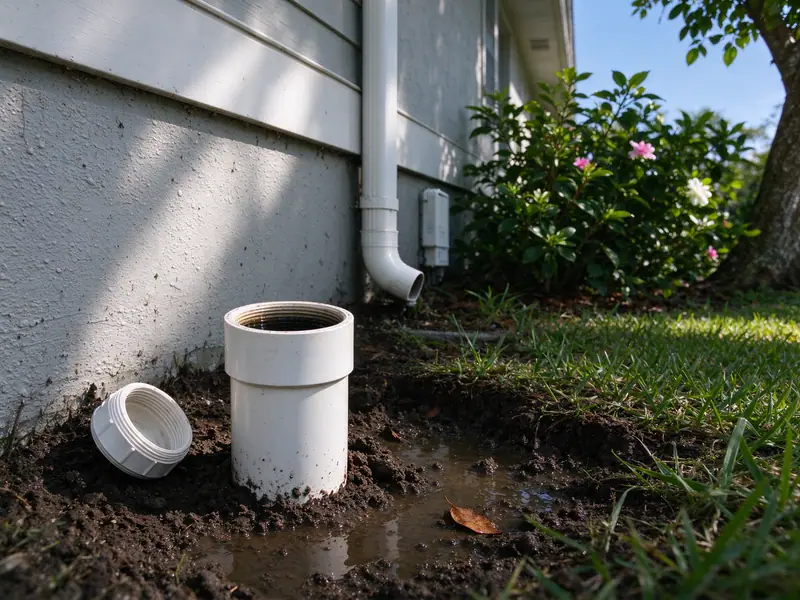
An accessible cleanout provides a different starting point from a buried fitting or limited entry route. Ask whether the intended access is available and whether any installation or excavation is separately priced. Cleaning should not begin as a vaguely defined permission to alter the building or open a surface without discussion.
Record how long the earlier clearing lasted and which fixtures are affected now. That history helps distinguish a one-time obstruction from a recurring condition needing inspection. Ask whether the accessible route can be recorded after material is removed and whether any section remains unobserved. If a structural recommendation follows, request the finding behind it rather than assuming that another blockage proves the whole lateral has failed. The estimate should distinguish the immediate clearing task from optional follow-up work. A clear separation lets the owner understand what restores use today and what might reduce a repeat problem later.
Compare the complete work
Compare clearing-only estimates with inspection-and-clearing packages carefully. The included records, access and follow-up can differ. For a recurring problem, discuss the value of identifying the cause rather than simply selecting the lowest immediate clearing number. A targeted investigation can support a repair decision without committing the owner to replacement.
Define what is included before authorizing work
A written estimate should separate the identified pipe work from access, preparation and restoration. Check whether the proposed price includes cleaning needed for inspection, reconnection of affected branches, permit coordination and the agreed completion record. A pipe-only allowance and a complete access-and-restoration estimate are not equivalent totals. Where a section could not be inspected, identify the uncertainty and the process for approving a change if further work is needed.
Insurance, assistance and service payment are separate questions. A recommendation does not establish policy coverage or eligibility for a program. Keep the recording and written scope and obtain any necessary authorization from the insurer or administrator. No free visit, warranty, financing arrangement or fixed response time is implied by the service description.
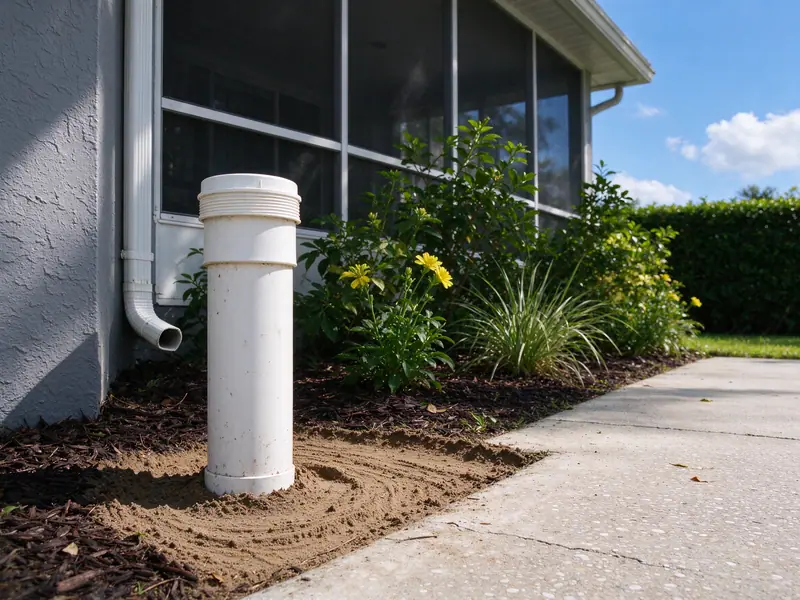
What this work looks like

Before and after
Cost and scope questions
A Tampa-modeled planning range for main-line clearing is $212–$651 per visit. It concerns obstruction removal, not structural repair. Access, severity and any included camera work need to be compared. This is planning context rather than a property-specific quote.
The sewer repair cost guide distinguishes local inspection and clearing planning ranges from national method allowances. Do not apply a wage-ratio multiplier or assume a national unit allowance is a local quote.
Completion evidence
Keep the location, symptoms, work performed and any subsequent recording. If roots or another recurring material were removed, note what was established about its source. A later contractor should be able to understand the earlier work and distinguish an unresolved defect from a new obstruction.
The work record should make the repair understandable after the surface is closed or equipment removed. Ask which section was observed, which was treated or replaced and what remained outside the scope. Keep any required inspection record with the approved estimate. If the proposed documentation is only a verbal summary, establish whether that is sufficient for the decision you are making before authorizing additional work.
What the property record should show
Main sewer line cleaning removes an obstruction or accumulated material from the accessible pipe. It can be the right first step for a blockage, and it can prepare a line for a more useful camera inspection. It is different from repairing a crack, displaced joint or failed slope.
The symptoms and access points help determine where to investigate. A recurring backup deserves attention to why material keeps collecting. Roots, deposits, damaged pipe and downstream restrictions can require different responses, even when the immediate symptom looks the same.
After cleaning, request a record of what was removed and which findings support any additional work. Restored flow is useful, but it should not be presented as proof that every structural problem has been resolved. A recorded follow-up can clarify the remaining decisions.
Questions about sewer line cleaning
What should a sewer line cleaning recommendation establish first?
The recommendation should connect the observed condition to the proposed scope. Ask what was seen, where the finding is located and which sections were not observed. The answer should explain why this service is appropriate rather than simply naming a method.
Does restored flow prove that the entire sewer is structurally sound?
No. Clearing can restore use while a crack, root entry or low section remains. Ask what could be inspected after cleaning and what evidence supports any further recommendation.
How should access be addressed in a sewer line cleaning estimate?
Identify the proposed entry or excavation location and the surfaces above it. Ask whether equipment movement, branch connections and final finishes are included. The completed-project comparison needs those items, even when the pipe work itself is narrowly defined.
What information helps an estimate for sewer line cleaning?
Send the property location, affected fixtures, inspection recording and any earlier written recommendation. Identify paving, occupied rooms or common access that could affect the work. Use Get an Estimate to describe what is happening.
What completion record should accompany sewer line cleaning?
Retain the approved work limits, any required inspection documents and the agreed completion evidence. Those records should distinguish the work completed from retained pipe and unobserved sections. Keep them with the property file for future assessment.
Read more about this decision
See sewer backup what to do for the related planning questions. See roots after sewer cleaning for the related planning questions. See sewer line warning signs for the related planning questions. See sewer backup after rain for the related planning questions.
Related service options
Compare sewer camera inspection, hydro jetting, sewer root removal, or describe the property and symptoms before deciding which scope fits.
Grease and recurring restrictions
Grease accumulation can restrict passage, and recurring drain blockages can have more than one contributing cause. Mechanical drain cleaning addresses material in the line; structural sewer repair addresses a defect in the pipe or route. The two may be needed at different stages, but one does not prove the necessity of the other.
A cleared restriction makes a follow-up inspection more informative. A useful follow-up distinguishes removable deposits from a crack, damaged joint or alignment concern. If visibility remains incomplete, keep that limitation with the recommendation rather than treating restored flow as a complete condition report.