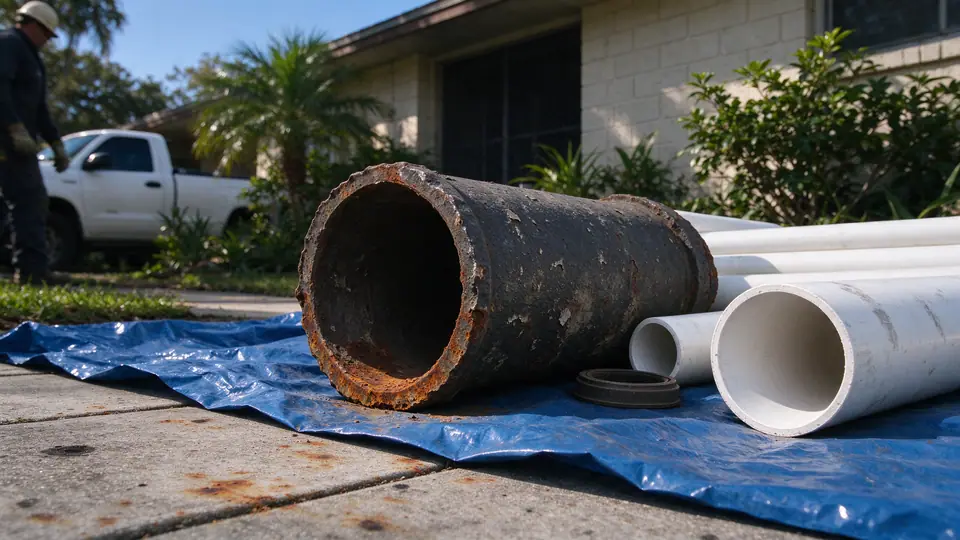
Cast iron sewer replacement in Tampa concerns confirmed cast iron drainage piping that needs replacement because of its condition. Internal deposits, corrosion and loss of pipe integrity are different findings. Age alone does not establish either the material or the correct repair for a particular property. Terra Tampa Sewer Line Repair offers this work for private sanitary piping in Tampa and nearby Hillsborough communities. Work is performed by fully licensed and insured contractors. Public mains, pumps, septic tanks and drainfields, and domestic water repiping are outside this service.
Is the problem buildup or remaining pipe condition?
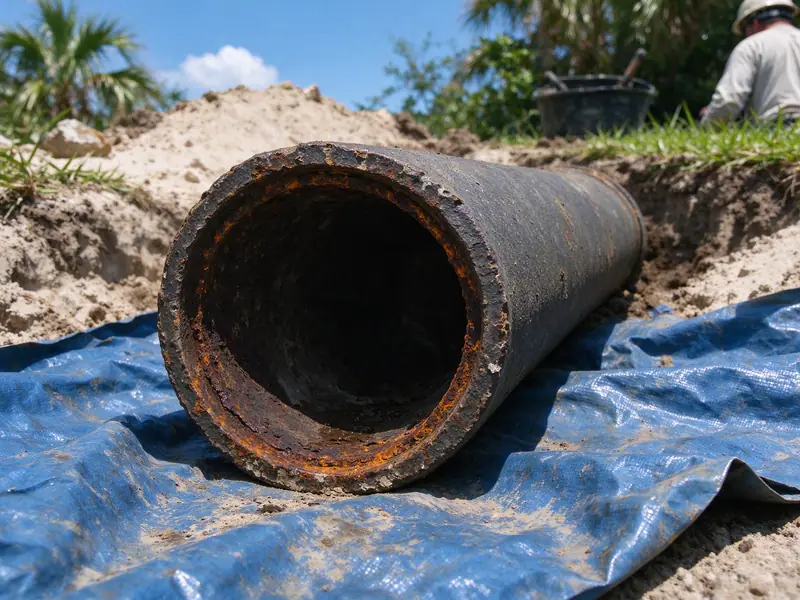
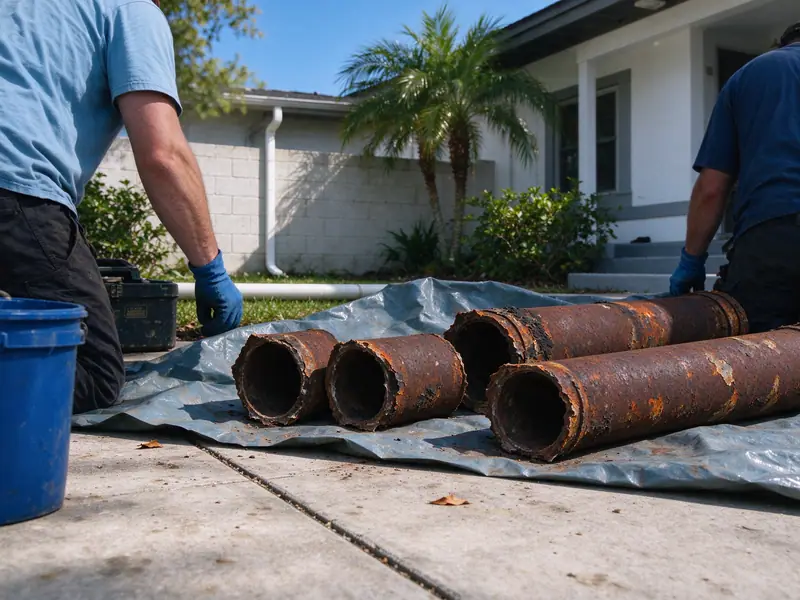
A restricted opening can affect flow even where the visible pipe retains its shape. Corrosion can also weaken or damage the pipe itself. Those conditions can occur together, and deposits may obscure the underlying surface. The recommendation needs to distinguish what was seen from what is suspected before cleaning, lining or replacement is compared.
How the method relates to the pipe
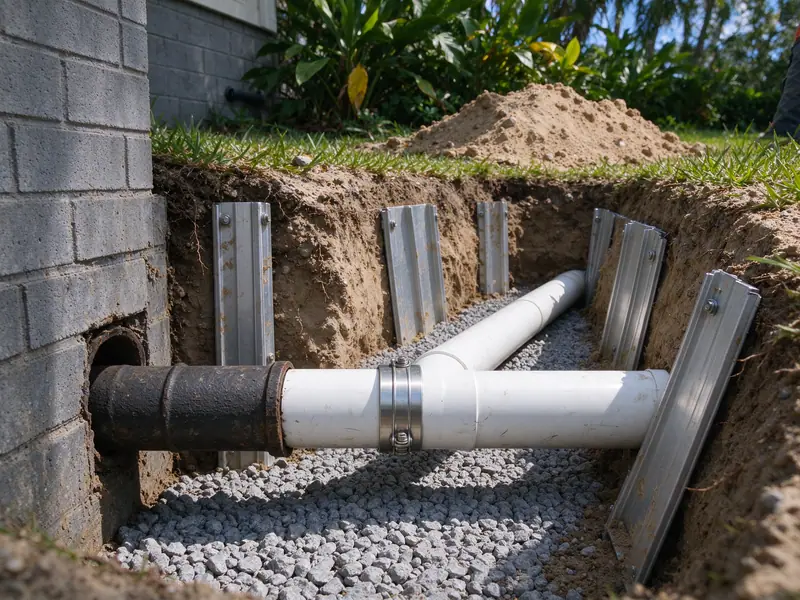
Replacement removes or bypasses the affected drainage section under an agreed design and connects the new work to the retained system. The layout may include branches beneath occupied rooms as well as outside pipe. Establishing the affected route and connections is therefore more useful than assuming that the visible outside section represents all the cast iron present.
Cleaning does not restore metal that has been lost. A lining recommendation also needs a suitable host and route. Where the view is obscured or a branch cannot be inspected, retain that limitation in the scope. Do not turn a neighborhood's housing age into a statement that every line contains failing cast iron.
Access and the property above the line
Under-slab access can affect flooring, cabinets or room use depending on the actual route. An exterior section can have a different set of constraints. Ask how the affected branches are identified and which finishes would be disturbed, then separate pipe installation from slab and finished-surface restoration.
Access is often the deciding practical question when confirmed cast iron runs beneath a building. Identify the affected branches and where they connect before treating a visible outside section as the entire system. Ask whether the recommendation concerns deposits, corrosion, loss of pipe shape or more than one condition. A cleaning proposal and a replacement proposal should explain their different objectives. If the inspection view is restricted, record that limitation rather than assuming the remaining wall is sound. Replacement planning should account for the connections left in place, the work area inside the property and the finish restoration after access.
Compare the complete work
Keeping an unaffected section, lining a suitable host or replacing a longer run can each be worth discussing. The relevant comparison is the established deterioration, remaining pipe and practical access. If the recommendation proposes only part of a building's drainage, ask what supports retaining the rest.
Define what is included before authorizing work
A written estimate should separate the identified pipe work from access, preparation and restoration. Check whether the proposed price includes cleaning needed for inspection, reconnection of affected branches, permit coordination and the agreed completion record. A pipe-only allowance and a complete access-and-restoration estimate are not equivalent totals. Where a section could not be inspected, identify the uncertainty and the process for approving a change if further work is needed.
Insurance, assistance and service payment are separate questions. A recommendation does not establish policy coverage or eligibility for a program. Keep the recording and written scope and obtain any necessary authorization from the insurer or administrator. No free visit, warranty, financing arrangement or fixed response time is implied by the service description.
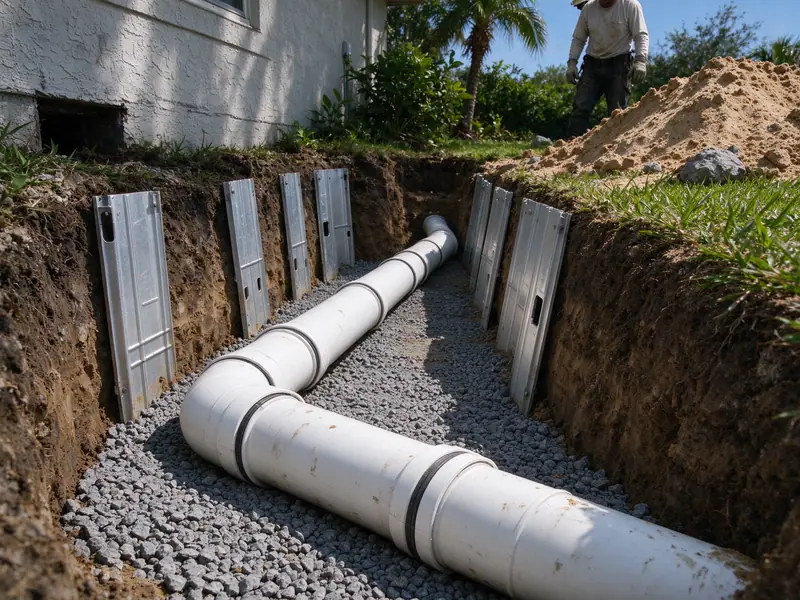
What this work looks like
Cost and scope questions
No dependable Tampa-wide lump-sum range is published here for this specific scope. The price depends on the established defect, accessible length, preparation, access and restoration. A narrow number without those items can create a misleading comparison.
The sewer repair cost guide distinguishes local inspection and clearing planning ranges from national method allowances. Do not apply a wage-ratio multiplier or assume a national unit allowance is a local quote.
Completion evidence
Keep material identification, inspection findings, new connection locations and the restoration scope together. A record of transitions between retained cast iron and replacement material helps explain what changed. Completion documentation should identify the repaired route rather than suggesting that every concealed branch has been renewed.
The work record should make the repair understandable after the surface is closed or equipment removed. Ask which section was observed, which was treated or replaced and what remained outside the scope. Keep any required inspection record with the approved estimate. If the proposed documentation is only a verbal summary, establish whether that is sufficient for the decision you are making before authorizing additional work.
What the property record should show
Cast iron sewer piping can develop internal deposits and corrosion. A restricted opening and a structurally failed pipe are different problems, and they can require different scopes. Cleaning may help reveal the remaining pipe condition; it cannot restore metal that has been lost.
The inspection needs to consider the accessible length, branches, joints and any sections beneath occupied rooms. Housing age alone does not establish pipe material or condition. At a specific property, records and inspection are more useful than a neighborhood assumption.
The recommendation should identify confirmed cast iron sections, show their condition and explain the choice of cleaning, lining or replacement. Where work crosses finished floors or joins other materials, the estimate should explain access, transitions and restoration responsibilities.
Questions about cast iron sewer replacement
What should a cast iron sewer replacement recommendation establish first?
The recommendation should connect the observed condition to the proposed scope. Ask what was seen, where the finding is located and which sections were not observed. The answer should explain why this service is appropriate rather than simply naming a method.
Does cleaning restore cast iron wall that has corroded away?
No. Removing deposits can improve passage and visibility, but it does not replace lost pipe material. The remaining condition needs its own assessment before a repair method is chosen.
How should access be addressed in a cast iron sewer replacement estimate?
Identify the proposed entry or excavation location and the surfaces above it. Ask whether equipment movement, branch connections and final finishes are included. The completed-project comparison needs those items, even when the pipe work itself is narrowly defined.
What information helps an estimate for cast iron sewer replacement?
Send the property location, affected fixtures, inspection recording and any earlier written recommendation. Identify paving, occupied rooms or common access that could affect the work. Use Get an Estimate to describe what is happening.
What completion record should accompany cast iron sewer replacement?
Retain the approved work limits, any required inspection documents and the agreed completion evidence. Those records should distinguish the work completed from retained pipe and unobserved sections. Keep them with the property file for future assessment.
Read more about this decision
See sewer pipe materials for the related planning questions. See sewer line repair or replacement for the related planning questions. See sewer line repair cost for the related planning questions. See sewer repair insurance for the related planning questions.
Related service options
Compare spot sewer repair, sewer line replacement, under slab sewer repair, or describe the property and symptoms before deciding which scope fits.