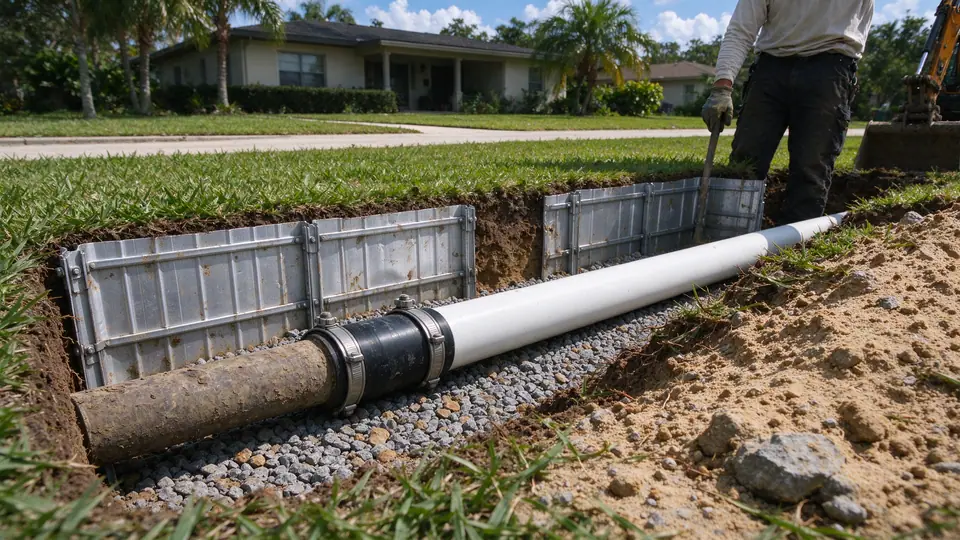
Spot sewer repair in Tampa addresses a defined defect while retaining pipe that can remain in service. It can be a sensible alternative to replacing an entire lateral when the evidence supports a limited scope. The surrounding condition and the proposed connections are part of that evidence. Terra Tampa Sewer Line Repair offers this work for private sanitary piping in Tampa and nearby Hillsborough communities. Work is performed by fully licensed and insured contractors. Public mains, pumps, septic tanks and drainfields, and domestic water repiping are outside this service.
Where should a limited repair begin and end?
The most obvious defect is not always the full repair boundary. A displaced joint, localized crack or root entry may be surrounded by usable pipe, or it may be one finding in a deteriorated route. The inspection needs enough coverage to explain why the proposed endpoints are appropriate. An unseen adjoining section should not be described as sound without support.
How the method relates to the pipe
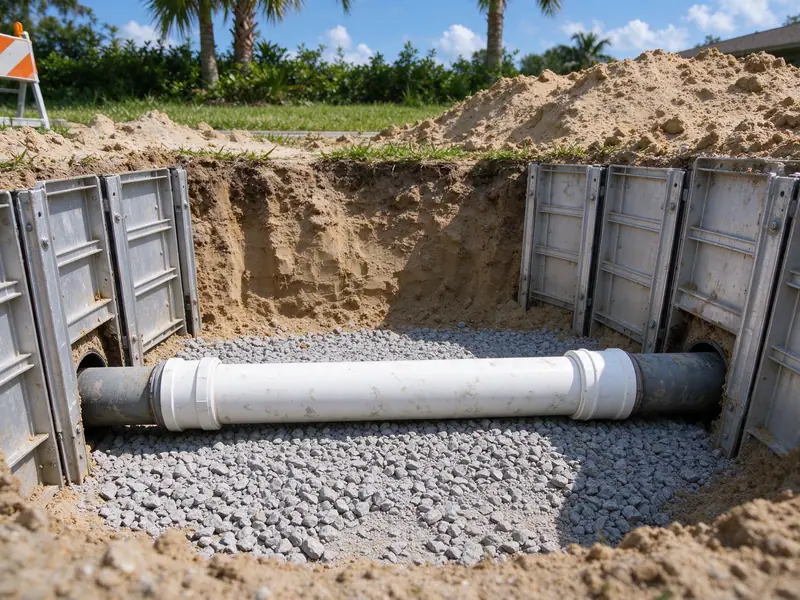
A localized repair can involve exposing and replacing a short section or a suitable sectional rehabilitation approach. The correct scope depends on the defect and available access. The objective is to resolve the established problem and connect to pipe that can continue functioning, rather than simply covering the most visible opening.
Spot repair does not address widespread corrosion elsewhere, a longer alignment problem or another obstruction beyond the observed section. A recurring backup after several limited repairs deserves a wider comparison. This does not automatically justify full replacement, but it does make the condition of the retained route important.
Access and the property above the line
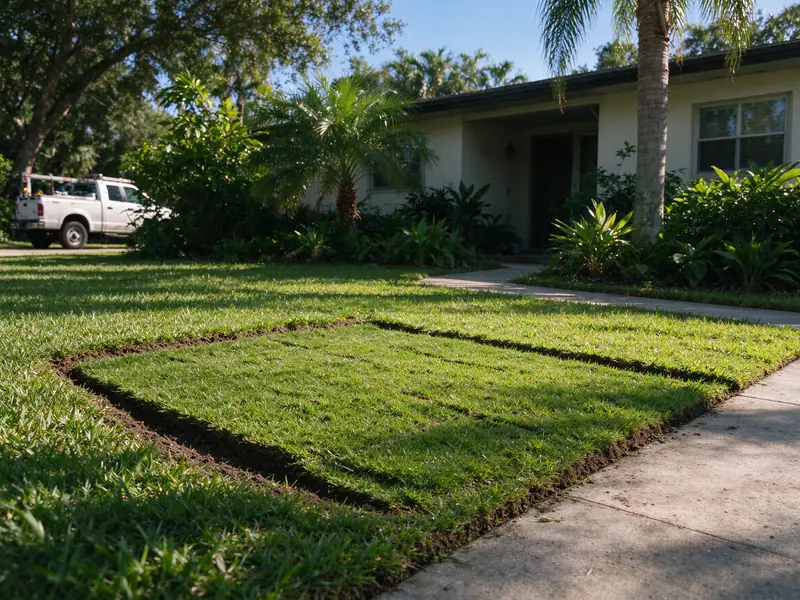
A short pipe repair can still sit beneath a costly surface. Identify access limits, equipment clearance and the finished surface before assuming a small repair is a small disruption. If the affected joint is near a building or boundary connection, clarify which additional connections or permissions are required.
A limited repair needs a convincing boundary. The proposal should show why the pipe beyond each connection can be retained and how the repaired section will be checked. If a root intrusion is the immediate problem, discuss the opening that allowed it. If a joint has moved, consider whether the observed condition is isolated. The surrounding line may have a different material or an earlier repair that affects the connection. Those details do not automatically rule out a spot repair, but they belong in the decision. Keep the scope specific enough that a small repair cannot quietly become an open-ended replacement.
Compare the complete work
Compare the limited repair with replacement using the remaining pipe condition, anticipated access and restoration work. The lower initial cost is only one consideration. A proposal should explain why keeping the adjacent line is practical and what unresolved conditions, if any, remain outside the repair.
Define what is included before authorizing work
A written estimate should separate the identified pipe work from access, preparation and restoration. Check whether the proposed price includes cleaning needed for inspection, reconnection of affected branches, permit coordination and the agreed completion record. A pipe-only allowance and a complete access-and-restoration estimate are not equivalent totals. Where a section could not be inspected, identify the uncertainty and the process for approving a change if further work is needed.
Insurance, assistance and service payment are separate questions. A recommendation does not establish policy coverage or eligibility for a program. Keep the recording and written scope and obtain any necessary authorization from the insurer or administrator. No free visit, warranty, financing arrangement or fixed response time is implied by the service description.
What this work looks like
Cost and scope questions
No dependable Tampa-wide lump-sum range is published here for this specific scope. The price depends on the established defect, accessible length, preparation, access and restoration. A narrow number without those items can create a misleading comparison.
The sewer repair cost guide distinguishes local inspection and clearing planning ranges from national method allowances. Do not apply a wage-ratio multiplier or assume a national unit allowance is a local quote.
Completion evidence
The completion record should identify the repaired location, connection points and evidence of the finished accessible passage. Keep the original finding alongside it. This is especially useful where several different materials or older repairs remain on the property, because future investigation should not mistake a previous repair for untouched pipe.
The work record should make the repair understandable after the surface is closed or equipment removed. Ask which section was observed, which was treated or replaced and what remained outside the scope. Keep any required inspection record with the approved estimate. If the proposed documentation is only a verbal summary, establish whether that is sufficient for the decision you are making before authorizing additional work.
What the property record should show
Spot sewer repair focuses on a localized problem while retaining sound pipe around it. The option makes sense when inspection supports a limited repair and the surrounding line can continue to function. The estimate should define the defect, the repair limits and the connections at each end.
A single camera finding does not prove that the rest of the line is sound. Access, repeat failures and the condition of adjacent sections all matter. Depending on the defect and site, the work may involve localized excavation or a suitable sectional rehabilitation method.
A limited repair needs an explanation of why the work stops at that location and what inspection coverage supports it. A targeted approach should resolve the cause of the problem. If deterioration is widespread, repeated small repairs can leave the larger issue in place.
Questions about spot sewer repair
What should a spot sewer repair recommendation establish first?
The recommendation should connect the observed condition to the proposed scope. Ask what was seen, where the finding is located and which sections were not observed. The answer should explain why this service is appropriate rather than simply naming a method.
Can a spot repair address deterioration elsewhere in the line?
A localized repair does not renew pipe outside its limits. The recommendation should explain why the adjoining sections can be retained and which unresolved conditions remain beyond the repair.
How should access be addressed in a spot sewer repair estimate?
Identify the proposed entry or excavation location and the surfaces above it. Ask whether equipment movement, branch connections and final finishes are included. The completed-project comparison needs those items, even when the pipe work itself is narrowly defined.
What information helps an estimate for spot sewer repair?
Send the property location, affected fixtures, inspection recording and any earlier written recommendation. Identify paving, occupied rooms or common access that could affect the work. Use Get an Estimate to describe what is happening.
What completion record should accompany spot sewer repair?
Retain the approved work limits, any required inspection documents and the agreed completion evidence. Those records should distinguish the work completed from retained pipe and unobserved sections. Keep them with the property file for future assessment.
Read more about this decision
See sewer line repair or replacement for the related planning questions. See reading sewer camera report for the related planning questions. See sewer repair permits tampa for the related planning questions.
Related service options
Compare sewer line replacement, cast iron sewer replacement, under slab sewer repair, or describe the property and symptoms before deciding which scope fits.
Joints, cracks and the mechanism behind a local defect
Offset pipe joints can interrupt a smooth passage and provide an opening for intrusion. Cracked sewer pipe can result from several mechanisms, including movement or construction damage, but a visible crack does not by itself establish which cause occurred. The recommendation should distinguish the observed defect from an unverified explanation.
Pipe joint repair may involve point repair excavation or a suitable sectional pipe lining approach. These are options to assess, not interchangeable promises. Compare the defect, access and retained pipe. A localized repair should not be represented as renewal of the full line, while a full-line proposal should explain why a local solution would leave important deterioration unresolved.
Compare the cause as well as the opening
Where roots are involved, root removal restores passage while the damaged entry may need separate attention. The camera report guide helps relate the observed defect to a defined repair boundary.